.png)

Unlocking the Green Building Equation: Creating Working Wellbeing to Become an Office Location Tenants Are Willing to Pay For
Green buildings are reshaping Bangkok’s office market, driving tenant demand, rental premiums, and long-term occupancy.

Unlocking the Green Building Equation: Creating Working Wellbeing to Become an Office Location Tenants Are Willing to Pay For
The criterias for choosing an office used to be simply about being in the city center, ease of access, and having reasonable rent. But nowadays, in an era of fierce competition to win over high talent—coupled with increasing health and environmental awareness—"workspace" has become a more vital part of the workforce’s well-being.
This is because the major challenge facing today’s businesses isn’t about "costs" alone, but about "people" as well. Employee illness or stress impacts the economy far more than most people realize. Research from the Global Wellness Institute (GWI) indicates that workplace health issues cause an economic loss in the U.S. amounting to $2.2 trillion annually, accounting for 12% of GDP. Furthermore, every day, over 1 million workers take leave due to accumulated stress.
Burnout and inability to maintain top-talent workers are forcing modern executives to seriously re-examine the "Work Ecosystems." Leaving employees in a terrible environment, unsupportive of well-being creates hidden costs—both through reduced productivity and an alarming decline in organizational engagement.
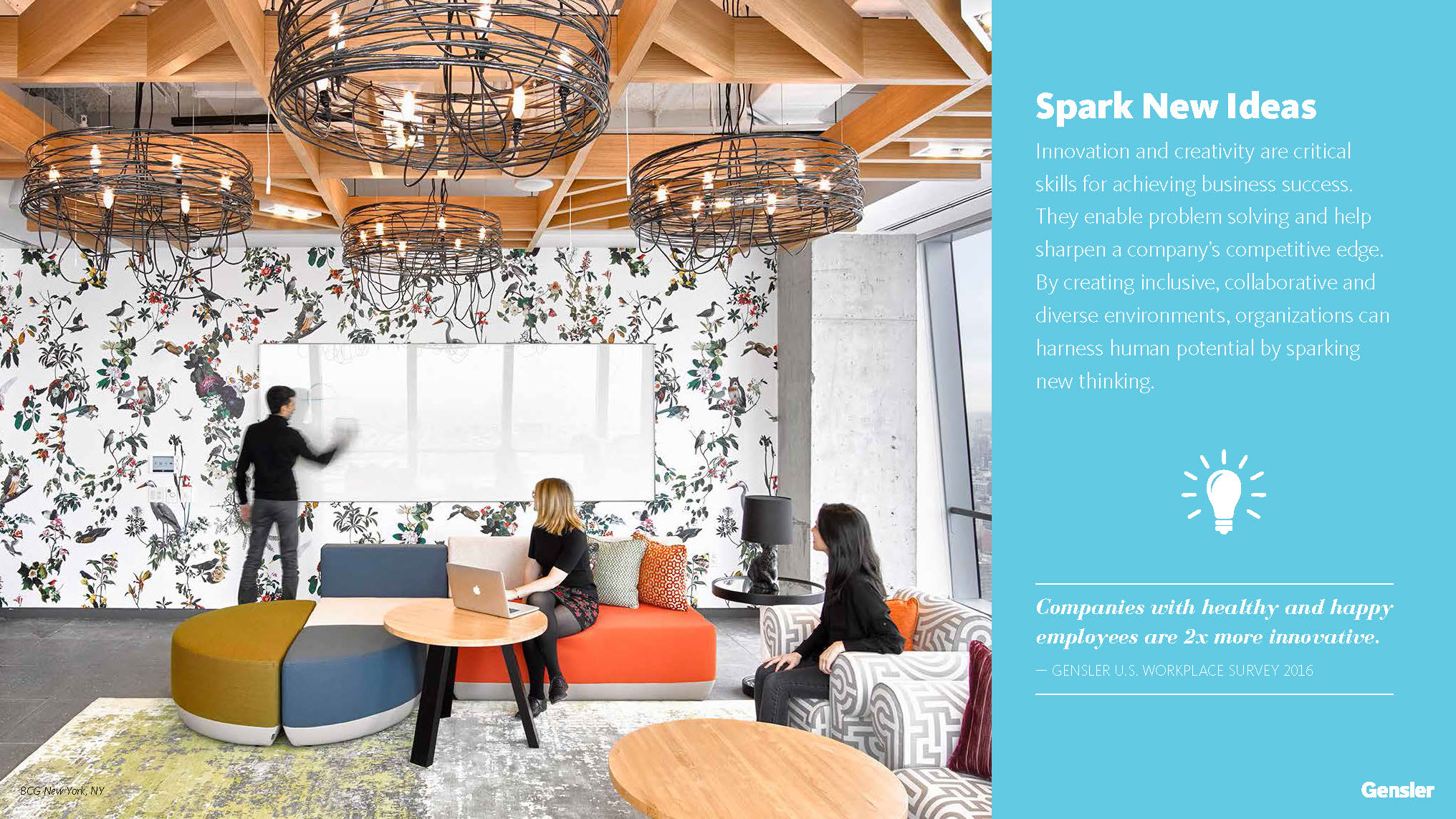
The Balanced Equation: Green Building = Good Health = Innovation Growth
When the concept of Sustainability pairs with employee Wellbeing, it creates a pathway for success:
Energy-efficient building + Green spaces + Clean air + Balanced natural light = Improved physical and mental health for employees
When employees are happy, they are more likely to be more creative, develop new innovations, and passionate about turning the organization’s goals into reality.
For an investor and executive, investing in employee well-being is "not an expense, but a worthwhile investment." Gensler’s 2016 WPS survey indicates an average ROI of up to 2.3 times the invested capital, doubling an organization’s creative potential. It is no surprise that over 97% of top Fortune 100 companies are actively pursuing workplace wellness policies.
A Golden Opportunity for Real Estate: From Choice to Must-Have
As global organizations place sustainability at the core of their strategies, office buildings meeting international standards such as ESG, LEED, WELL, or FITWEL are no longer just for symbolic and company’s image, but they are a "Must-Have" for multinational corporations selecting lease space to achieve both carbon reduction and employee physical/mental health goals.
This phenomenon creates positive impact on building owners and investors:
- Rental Premium: Because green buildings have become highly sought-after assets with strong demand, they command higher rental prices compared to conventional offices.
- Low Vacancy Rate: Vacancy rates remain lower than the market average.
- Flight to Quality: The market perspective has shifted from seeing "green buildings as increased construction costs" to viewing them as a "guarantee for stable long-term returns." Conversely, non-adaptive buildings face risks of declining rental yields and a shrinking tenant base.
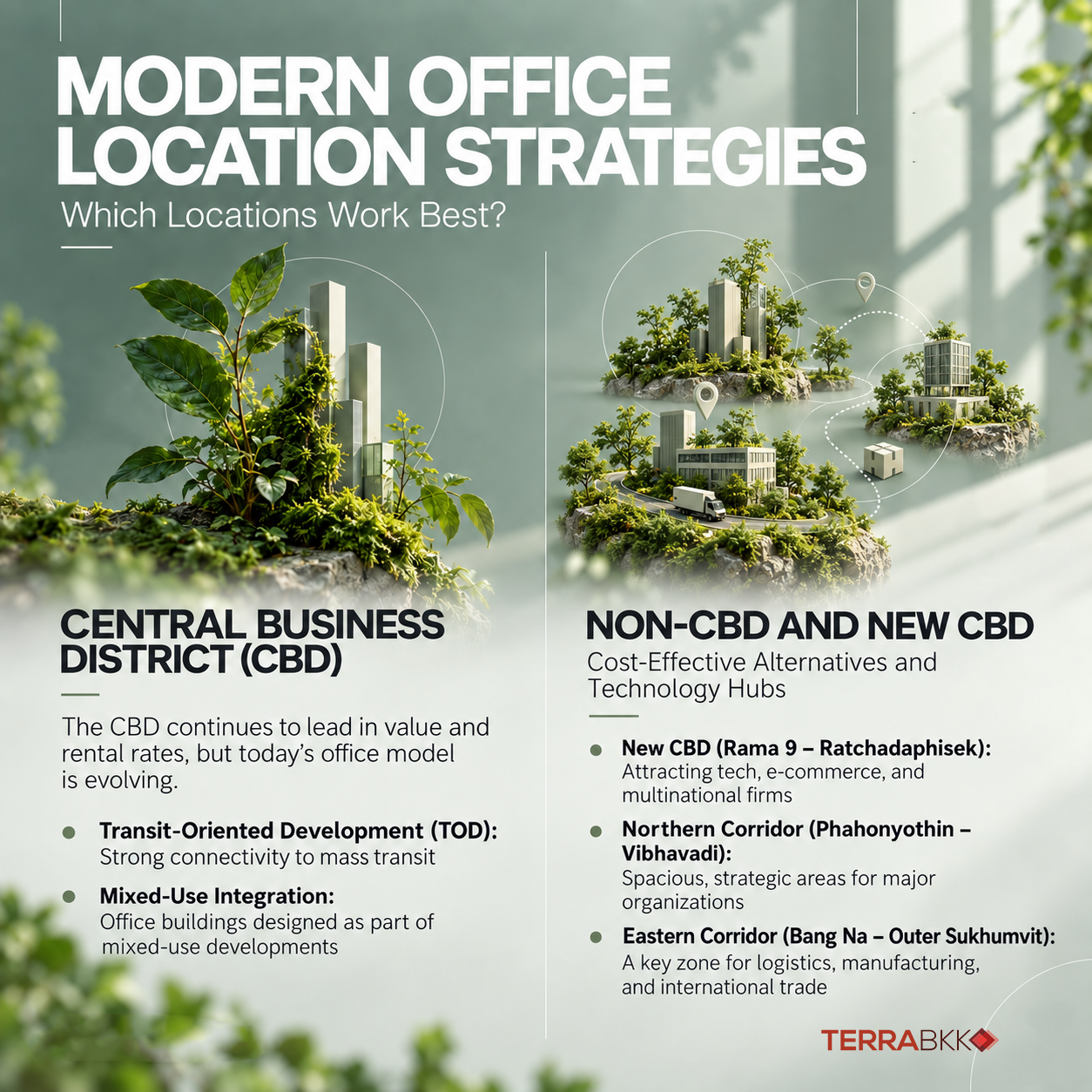
In-Depth Location Strategy: Which Locations Work?
While Green Buildings serve as a magnet to attract Grade A tenants, the post-pandemic situation—defined by Hybrid Working alongside an over-supply from the rollout of mega-project Grade A office buildings—has triggered a "Flight to Quality" phenomenon. Tenants are migrating from older buildings to newer, higher-quality facilities situated in prime locations.
The key question is: "Which locations are worth looking at?" They can be view in two areas, each with distinctive characteristics:
- Inner City CBD: Known for their prime commercial zones. The Core Business District (CBD)—including Silom, Sathon, Ploenchit, Wireless, and the Early part of Sukhumvit—continues to lead in terms of value and the highest rental rates. However, the location has evolved:
- Transit-Oriented Development (TOD): Modern Grade A office locations prioritize direct connectivity to mass transit stations (Direct access). These buildings maintain higher Occupancy Rates than standard offices. In contrast, older or lower-tier buildings face tenant migration to modern facilities offering better deals, amenities, or closer proximity to train lines—even with potential rental rate discounts of 20–30%.
- Mixed-Use Integration Strategy: Modern offices in CBD no longer a stand alone building. They are a part of mixed-use projects integrating retail spaces, hotels, and green areas (such as One Bangkok or Dusit Central Park). This answers the demand for Work-Life Integration and enhances appeal for Talent Attraction among younger generations.
- Non-CBD and New CBD: Cost-Effective Alternatives and Tech Hubs. The expansion of infrastructure has positioned Non-CBD areas and New CBDs to play key roles in easing financial burdens for organizations:
- New CBD (Rama 9 – Ratchadapisek): A prime location attracting tech businesses, e-commerce, and multinational corporations from Asia due to convenient travel via the MRT and proximity to expressways.
- Northern Corridor (Phahonyothin – Vibhavadi): Strategic location for large state-owned and private corporations (e.g., PTT, SCG), as well as companies seeking large, spacious areas at a cost-effective price—particularly around the Bang Sue transportation hub.
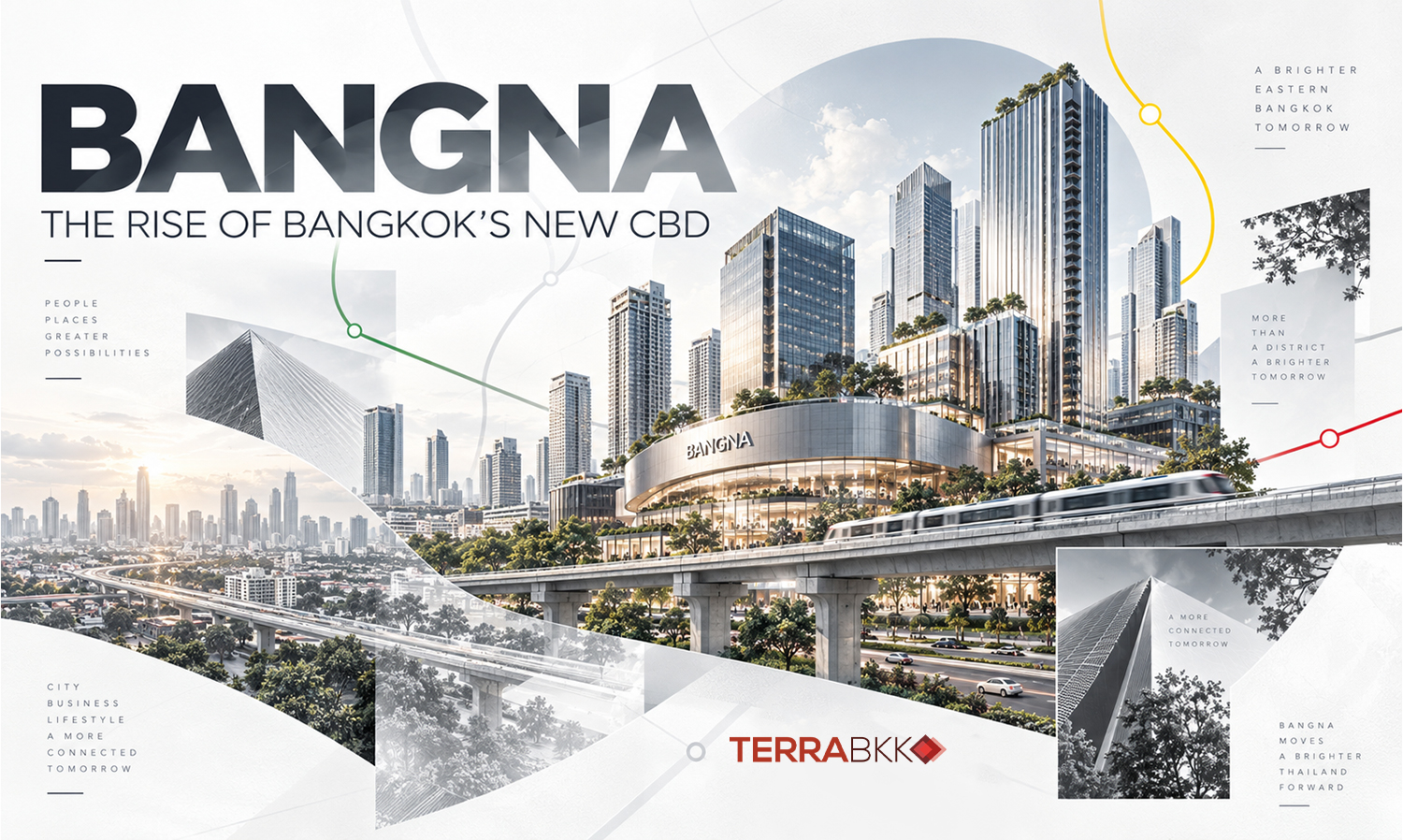
- Eastern Corridor (Bang Na – Late Sukhumvit): Strategic gateway for logistics, manufacturing, and international trade industries due to its connection to the Eastern Economic Corridor (EEC) and Suvarnabhumi Airport.
Commercial Real Estate Market Analysis Summary (via real estate consultancies & research institutes):
- Supply Inflow Rate: A survey of the 2025 office building market by Knight Frank Charter found that total office space will reach 6.49 million sq.m. in 2025 (up 2.9% YoY), with 4.97 million sq.m. leased. It is projected that over the next 3 years, nearly 1 million sq.m. of new office space will open across both CBD and Non-CBD zones.
- Rental Gap: Grade A+ office rents in the heart of the CBD average 1,200 THB/sq.m./month, whereas Grade B or older buildings in the same area average 863 THB/sq.m./month.
- The zone commanding the highest office rent is Siam, Chidlom, Ploenchit, Nana, Asoke, and Phrom Phong, averaging 1,027 THB/sq.m./month with a 75% occupancy rate.
- Office buildings in the Rama 9 – Ratchadapisek zone post the highest occupancy rate at 81%, driven by Chinese business activity, proximity to the Chinese Embassy, and low upcoming supply.
- ESG & Sustainability Standards: Location strategies accompanied by green building certifications (LEED, WELL, FITWEL Certification) have become mandatory prerequisites for Multinational Corporations (MNCs). Certified buildings command higher rental prices and enjoy visibly more stable occupancy rates than conventional buildings.
The overall commercial real estate and office rental market clearly signals that the value of a modern office is no longer measured by size or external luxury, but by its ability to foster employee well-being, offer high flexibility, and fulfill environmental requirements.
While each location strategy offers distinct advantages aligned with different investment goals, one shared trend stands out: Green Buildings focusing on Wellbeing have become assets that generate Rental Premiums and sustain long-term occupancy in this era.
Subscribe to our newsletter
Stay up to date with Angel RE news and pre launch offers