.png)

Bangkok’s Shift Toward the Premium Market : A Top 10 Global Ranking Signals New Opportunities for Foreign Investors
Bangkok enters the global premium market spotlight, creating new real estate opportunities for HNWIs and foreign investors.

-copy-185.jpg)
Bangkok’s Shift Toward the Premium Market : A Top 10 Global Ranking Signals New Opportunities for Foreign Investors
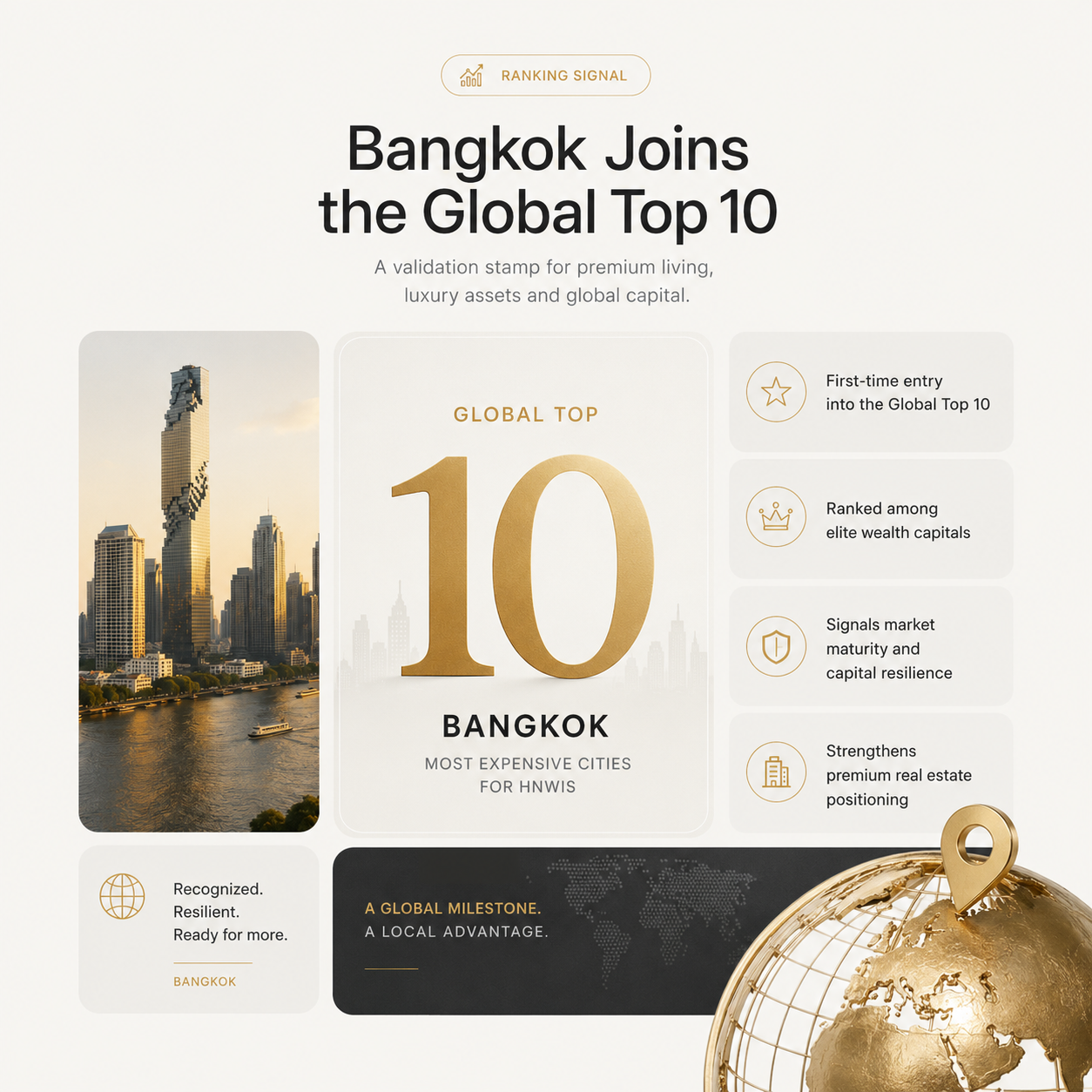
The global real estate market is entering a new phase. In the past, foreign investors often viewed Bangkok as a value-driven market, offering attractive prices and greater accessibility compared with other major cities in the region. However, the Julius Baer Global Wealth and Lifestyle Report 2026 reveals that Bangkok has now entered the world’s Top 10 most expensive cities for premium living among high-net-worth individuals, or HNWIs, placing it alongside global cities such as Singapore, Zurich, Monaco, London, and Hong Kong.
Although being ranked among the cities with the highest premium living costs may initially be interpreted as a sign of rising expenses, it also reflects Bangkok’s continued development into a more mature and sophisticated market. The city is increasingly supported by stronger infrastructure, elevated lifestyle offerings, high-quality services, and demand from affluent buyers.
For foreign investors, the ranking is therefore not merely about higher prices. It represents the evolution of Bangkok’s premium market and its growing recognition on the global stage.
Bangkok Joins the World’s Leading Premium Cities
Bangkok’s entry into the Top 10 places Thailand’s capital among cities with well-established premium market ecosystems. The Julius Baer index evaluates the prices of 20 premium goods and services, including luxury residential property, private education, healthcare, travel, lifestyle experiences, and specialist services for wealthy individuals.
The ranking is consistent with Bangkok’s growing ability to support the needs of HNWIs through improved quality of life, convenience, and internationally connected services.
From an investment perspective, the result strengthens confidence that Bangkok is no longer defined solely as a low-cost destination. It is increasingly becoming a market with significant potential for growth in the premium segment.
Asia Remains a Key Centre of Premium Demand
The 2026 report highlights differing conditions across global luxury markets. While some European markets have begun to slow, Asia-Pacific and the Middle East continue to demonstrate strong momentum.
Bangkok stands to benefit directly from this trend because of its economic potential, tourism industry, internationally recognised healthcare services, diverse lifestyle offerings, and suitability for long-term residence.
These strengths continue to attract regional buyers, international families, and affluent individuals seeking a base in Asia. Rising premium costs may therefore reflect the expansion of a higher-quality market, particularly for properties in prime locations that offer strong standards and support long-term living.
Bangkok’s Strength in Lifestyle and Experience
Today’s HNWIs are not focused solely on acquiring assets. They increasingly prioritise quality of life, meaningful experiences, and access to services related to health, leisure, and everyday well-being.
This is one of Bangkok’s key competitive strengths. The city offers internationally accredited hospitals, high-quality restaurants, luxury hotels, spa and wellness services, and a broad range of lifestyle experiences compared with many other major global cities.
Although certain products, such as luxury vehicles and imported designer goods, may be relatively expensive, many of Bangkok’s lifestyle services still offer strong value compared with cities such as London, New York, and Singapore.
This balance between the status of a premium global city and a quality of life that remains comparatively attractive continues to make Bangkok an appealing destination for residence, investment, and long-term stays.
A Potential Role in Global Investment Portfolios
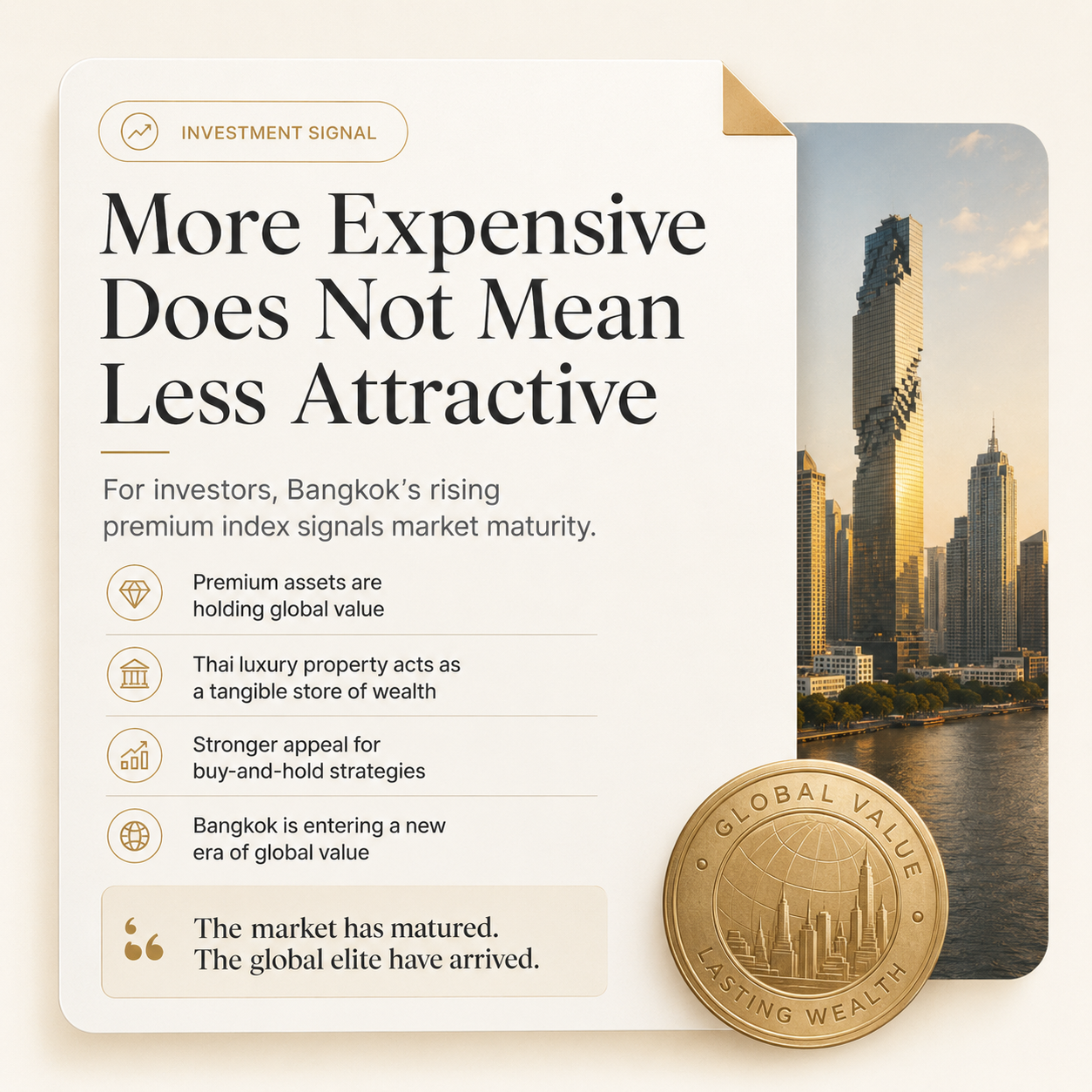
Bangkok’s rise into the group of the world’s leading premium cities also reflects the market’s ability to preserve value within a global context, particularly when asset prices are assessed in US dollars.
For foreign investors, premium residential property in Bangkok may therefore play a greater role as a portfolio diversification asset, especially during periods of global economic volatility driven by inflation, interest rates, and geopolitical uncertainty.
However, investment decisions must still be based on the specific fundamentals of each development. Key considerations include location, developer credibility, local supply, rental potential, property management standards, and resale liquidity.
Bangkok’s Top 10 ranking should therefore not be interpreted simply as evidence that the city has become more expensive. More importantly, it signals that Bangkok’s premium property and lifestyle ecosystem is becoming more established, internationally recognised, and increasingly relevant to global investors.
Subscribe to our newsletter
Stay up to date with Angel RE news and pre launch offers