.png)


Exploring Thailand's Real Estate Hotspots in an Era When Dream Homes Are Defined by Wellness, Not Size
While Thailand’s real estate market faces mounting challenges amid a sluggish economy and subdued consumer confidence, opportunities remain for developers willing to adapt to evolving lifestyle demands.
A notable shift can be seen in the way consumers choose where and how they live. Residential preferences are increasingly being shaped by the principles of Wellness Living and Longevity—prioritizing environments that support holistic well-being, preventive health, and a longer, healthier life. These emerging trends poise as one of the most promising growth opportunities for the next generation of Thailand’s real estate industry.
Bangkok’s Most Sought-After Residential Destinations
To win the hearts of today’s consumers—who increasingly prioritize both physical and mental well-being—requires listening closely to their preferences and aspirations.
According to the study “An In-Depth Look at Thai Consumers’ Lifestyle and Wellness Perspectives” conducted by Terra Research, the real estate market research consultancy of TerraBKK, a survey of 400 respondents nationwide between 1–15 May 2026 revealed important insights into residential location preferences. 52% of the respondents were based in Bangkok, while the remaining 48% were distributed across the metropolitan outskirts and provincial areas.
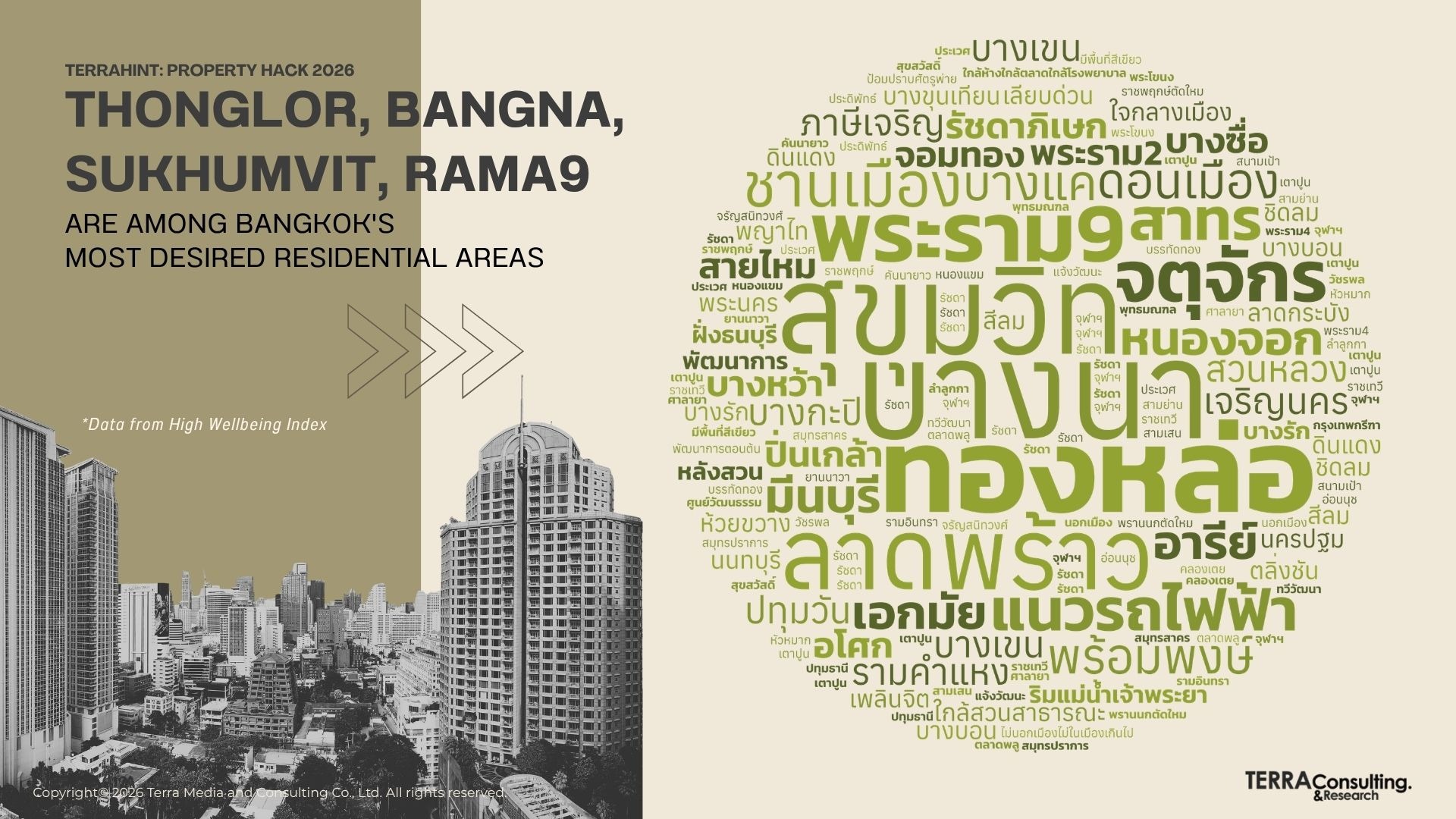
The findings indicate that among consumers with high wellness index scores, the most desirable residential locations in Bangkok and its surrounding areas span a variety of urban settings—from city-center districts to suburban and peripheral locations with convenient connectivity.
Bangna continues to generate strong demand for high-end single-detached homes due to its spacious environment and ability to support wellness-oriented lifestyles.
Sukhumvit and Thonglor, meanwhile, remain highly sought-after urban locations thanks to their excellent accessibility and robust rental markets, offering attractive rental yields and investment potential.
Other highly searched and well-regarded locations include Rama 9, Chatuchak, Ratchadaphisek, Ratchaphruek, Prawet, and Bang Khen. Notably, this consumer segment is not exclusively drawn to central business districts. Instead, they place significant value on proximity to green spaces and access to essential amenities that enhance everyday quality of life.
Beyond location, modern consumers are placing equal importance on the concept of a “quality community.” The same survey found that the defining characteristic of a quality community, according to respondents, is a culture of mutual respect for individual rights and differences. Consumers aspire to live in communities where residents coexist with understanding, kindness, and a willingness to support one another, while also feeling secure in both their personal safety and property.
For developers, integrating these wellness-oriented values into project planning and community design presents a significant opportunity. By creating residential environments that foster both physical well-being and social wellness, developers will be better positioned to meet evolving consumer expectations and accelerate sales performance.
From Prime Locations to Wellness Living
The growing preference for locations that offer access to green spaces and a sense of safety reflects a fundamental shift in consumer priorities. Homebuyers today are no longer focused solely on location convenience or luxury. Instead, a new growth curve is emerging—one that is shaping the future of residential development around the concept of Wellness Living, designed to support Longevity, or living longer with quality and purpose.
The same survey reveals that health has become a top priority for Thai consumers, with 93% stating that they place significant importance on their health. The importance of health also increases with age. Furthermore, 43% of Thais spend between THB 1,000 and 3,000 per month on health-related expenses, including fitness memberships, healthy food, vitamins and supplements, health screenings, and wellness activities.
These insights provide valuable guidance for real estate developers. By understanding consumers’ actual spending patterns and willingness to invest in their well-being, developers can better design health-focused services, amenities, and wellness packages that align with the purchasing power of different customer segments.
A deeper examination of the concept of Longevity reveals that consumers do not define it simply as living longer in terms of years. Rather, longevity is associated with maintaining good physical and mental health, preserving independence, and enjoying a high quality of life throughout every stage of life.
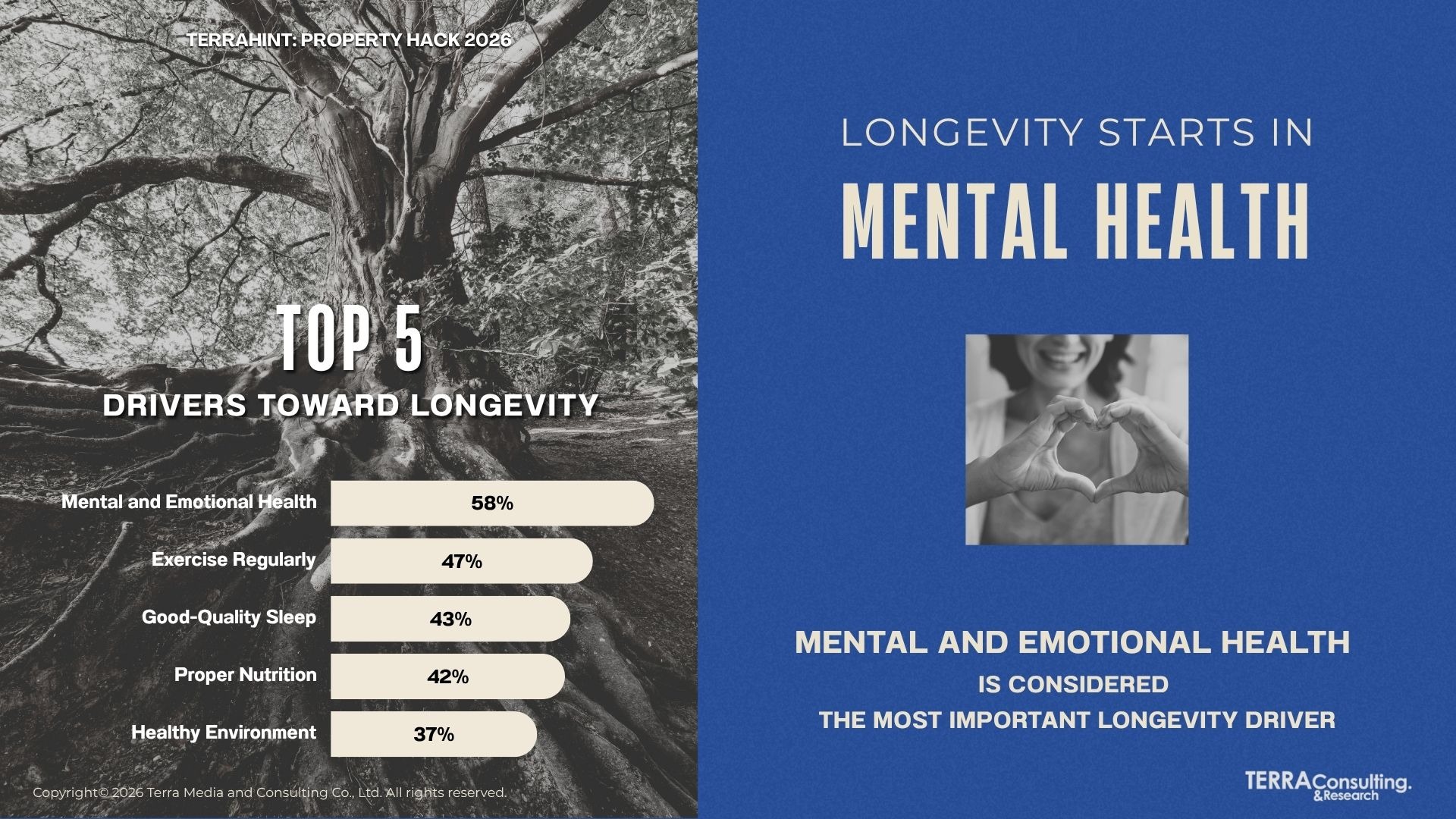
According to consumers, the most important factors contributing to longevity are:
- Mental and emotional well-being – 58%
- Regular physical exercise – 47%
- Quality sleep – 43%
- Good nutrition – 42%
- A healthy living environment – 37%
These findings provide compelling evidence that mental and emotional well-being are the foundation—and perhaps the most critical driver—of healthy longevity. More than any other factor, consumers recognize that a sound mind is the starting point for sustaining physical health, independence, and overall quality of life over the long term.
As a result, the concept of residential development must evolve. Rather than focusing solely on physical perfection, developers need to create living environments that can nurture emotional well-being, alleviate stress, and provide residents with a sense of calm, comfort, and restoration in their daily lives.
How Much Does Wellness Living Influence Homebuying Decisions?
The connection between well-being and housing has become increasingly inseparable. Survey findings reveal that 90% of consumers are more likely to consider and purchase a home if the project incorporates Wellness Living principles into its design and services. The impact is even more pronounced among those currently living in commercial buildings or shophouses, where interest rises to 94%.
When examining what consumers seek in a modern home, the findings suggest that the definition of a dream home has shifted. It is no longer about owning a larger house; rather, it is about living in a home that promotes health, safety, and overall well-being.
Among respondents:
- 29% identified long-term health and quality of life as their top priority.
- 23% prioritized safety, privacy, and peace of mind.
- 12% placed importance on a positive environment and a strong sense of community.
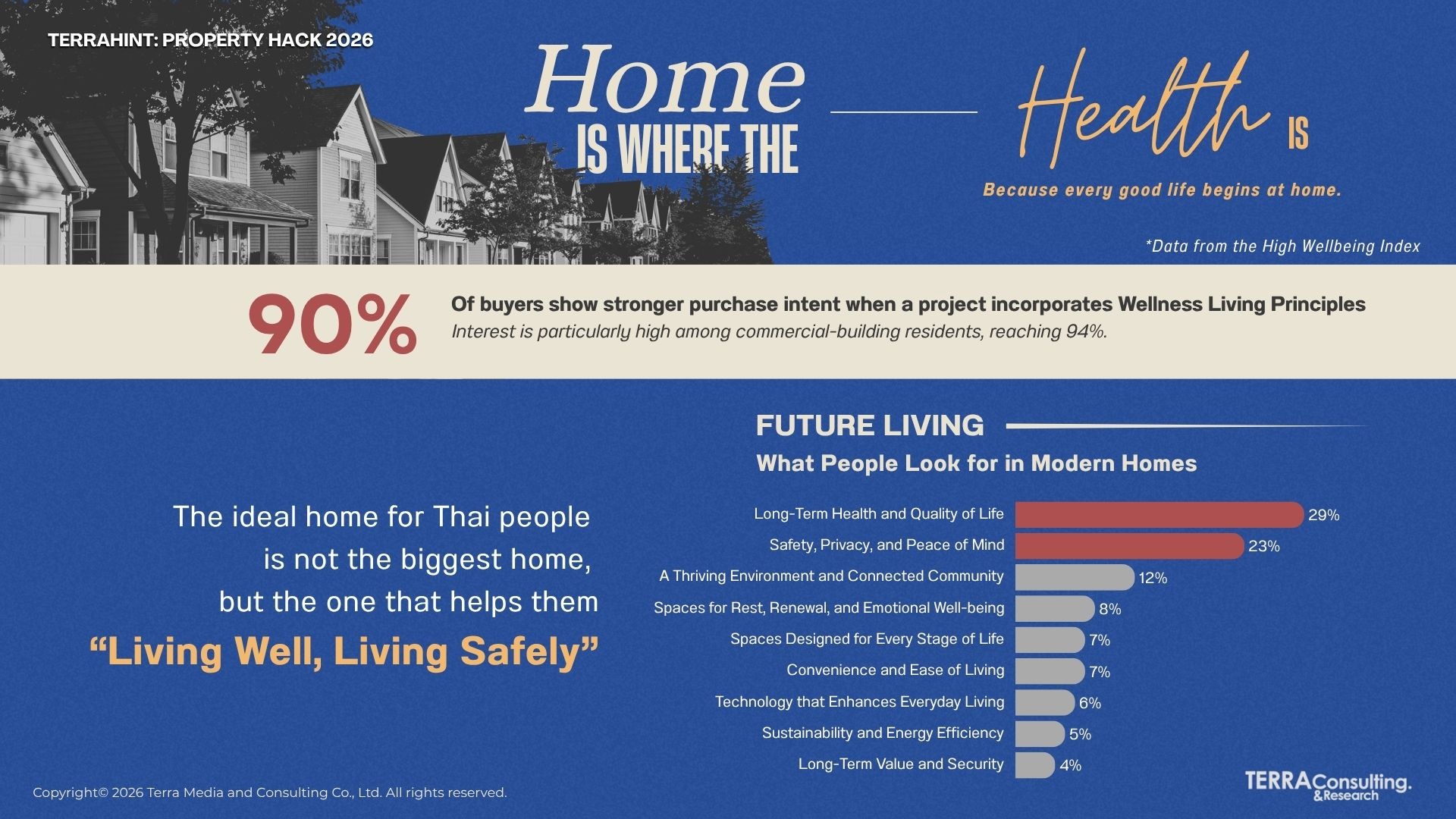
These insights indicate that today's consumers are increasingly evaluating residential properties not merely as physical assets, but as environments that can actively support healthier, safer, and more fulfilling lives. For developers, Wellness Living is no longer a niche concept or value-added feature—it is rapidly becoming a key factor influencing residential purchase decisions.
What Kind of Wellness Living Do Residents Really Want?
For developers, the ability to decode these evolving consumer needs presents a significant opportunity. When translated into tangible design features and practical living solutions, these insights can become powerful competitive advantages in an increasingly crowded market.
Yet a closer look at today's housing landscape reveals a substantial gap between what consumers want and what existing residential products actually provide. Across virtually all housing segments, the largest unmet need is access to green space—the feature that consumers desire most, but often find lacking in their current homes.
Expanding green spaces is therefore about much more than landscaping for visual appeal. It is about creating a living ecosystem that supports mental well-being, reduces stress, and makes it easier for residents to reconnect with nature in their everyday lives.
Beyond green space, fresh air is rapidly emerging as the new frontier of wellness—“Fresh Air is the New Wellness.” Today's consumers place growing importance on access to naturally clean air and effective ventilation systems, rather than relying solely on conventional air-conditioning.
When examined by residential product type, wellness needs become even more distinct:
Single-Detached Homes
Residents prioritize:
- Fresh, natural air
- High-performance air filtration systems
- Peace and quiet
- Privacy
- Wellness-oriented activities within the community
- Dedicated spaces for relaxation and mental restoration
Townhomes
Residents place the greatest emphasis on:
- Spaces for mental recovery and relaxation
- Peaceful surroundings
- Privacy
- In-home exercise and fitness areas
Condominiums
Residents are increasingly seeking:
- High-quality fitness facilities
- Professional wellness centers and wellness-focused amenities within the development
These findings suggest that Wellness Living is no longer defined by a single amenity or facility. Instead, it encompasses a holistic living environment that supports physical health, mental well-being, and everyday quality of life. As consumer expectations continue to evolve, successful residential developments will be those that move beyond traditional concepts of housing and deliver meaningful wellness experiences tailored to the unique needs of their residents.

Understanding the distinct needs of residents across different housing segments will enable developers to design and deliver residential innovations that are more relevant, meaningful, and aligned with consumer expectations.
This direction not only helps the real estate sector navigate the current market adjustment cycle, but also serves as a bridge toward a new era of property development—one that genuinely promotes long-term well-being, healthier lifestyles, and lasting happiness for residents.
Subscribe to our newsletter
Stay up to date with Angel RE news and pre launch offers