.png)

Why Wongwian Yai Is About to Become One of Bangkok's Best Rental Bets
Wongwian Yai is emerging as a Bangkok rental hotspot, driven by lower rents, strong tenant demand and new MRT connectivity

Why Wongwian Yai Is About to Become One of Bangkok's Best Rental Bets
For years, "Wongwian Yai" meant one thing to most foreign buyers looking at Bangkok: the wrong side of the river.
That view is roughly fifteen years out of date — and by 2028 it will be indefensible. Here's the case.
Three stops from Sathorn, at half the price
Start with the thing that's true today, before we get to anything under construction.
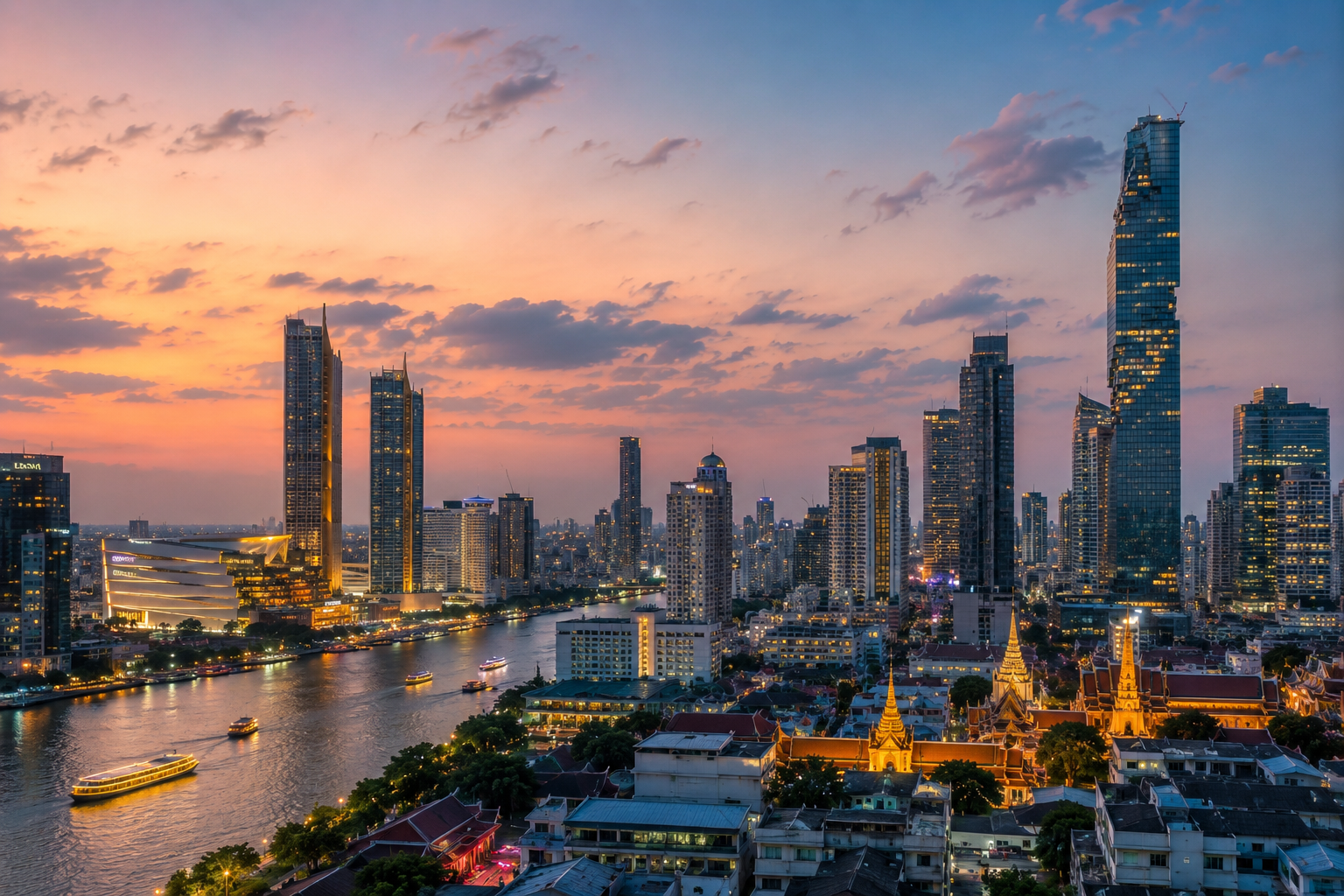
Wongwian Yai has had a BTS station since 2009. From S8, you're one stop from ICONSIAM and the Charoen Nakhon riverside, two stops from Saphan Taksin and the river boats, and three or four stops from Surasak and Chong Nonsi — the middle of the Sathorn and Silom financial district.
Door to desk, that's a 20–25 minute commute to a Sathorn office. At rush hour it beats large stretches of Sukhumvit.
Meanwhile, rents on the Thonburi side sit materially below equivalent stock across the river. That gap is the entire reason the area already rents well. A mid-level professional working in Sathorn trades twenty minutes of commute for a 30–40% discount on housing, and thousands of them make that trade every day.
This isn't demand anyone needs to invent or forecast. It's what fills the existing Thonburi towers right now.
What changes in 2028
Here's where it gets interesting.
The MRT Purple Line's southern extension — a 23.6 km, 17-station route running from Tao Poon down to Rat Burana — is currently under construction at a budget of around ฿82 billion. As of the end of June 2026, it was roughly 76% complete.
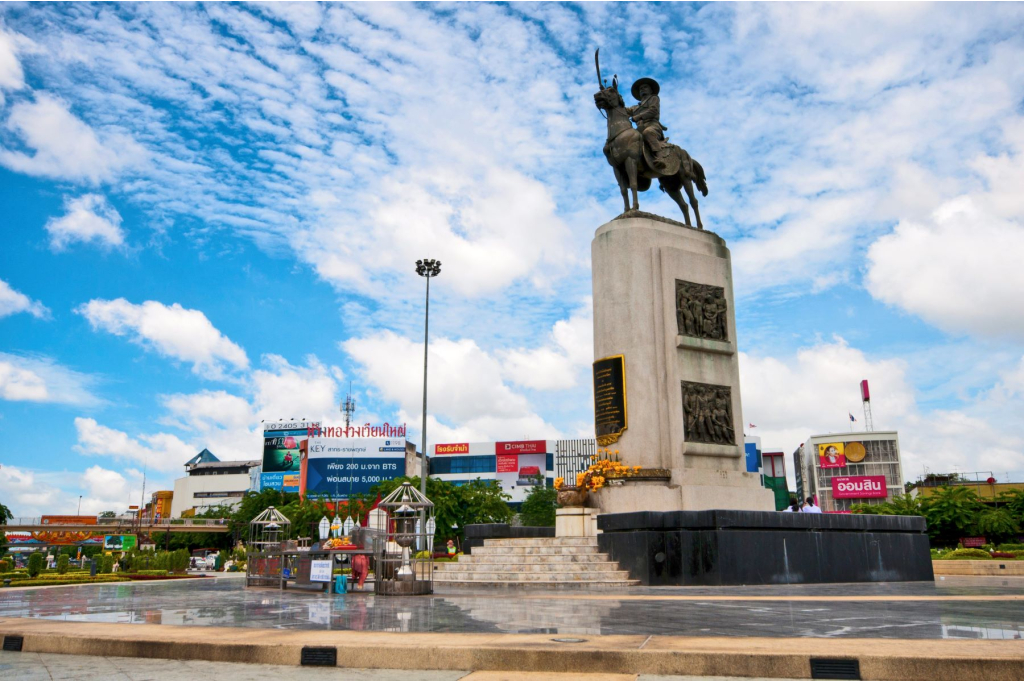
Its alignment matters enormously for this particular pocket of Bangkok. The tunnel runs along Prajadhipok Road, passes directly beneath the Wongwian Yai roundabout, and continues underneath Somdet Phra Chao Tak Sin Road past Somdet Phra Pinklao Hospital before rising to an elevated structure along Suksawat Road.
At Wongwian Yai, it delivers an underground station — PP25 — interchanging with the existing BTS.
So from 2028, one address connects you to:
- Sathorn, Silom, Siam and Sukhumvit via the BTS Silom Line
- Bang Sue Grand Station and the Nonthaburi corridor via the Blue Line and existing Purple Line at Tao Poon
- The old city, Chinatown and Rattanakosin via the Blue Line at Wang Burapha
- The eastern suburbs via the planned Orange Line at Democracy Monument
That is the difference between "a suburb with a train" and "a transport interchange." Interchanges are where Bangkok land values have historically repriced hardest, and Wongwian Yai is getting one.
The extension also brings park-and-ride facilities at Bang Pakok and Rat Burana, funnelling car commuters from southern Bangkok and Samut Prakan onto the line — and through this station.
Where the tenants actually come from
Yield projections are easy to write and hard to justify. So rather than quoting a number and hoping, here's the tenant demand this area draws on. Six distinct pools, which is the real point — diversified demand is far more durable than a single dependency.
Sathorn and Silom commuters. The core of the rental book. Thai and expatriate professionals in banking, insurance and corporate roles who work in the CBD and can't justify CBD rents. Stable, salaried, and already here.
The ICONSIAM and riverside workforce. One BTS stop north sits one of Asia's largest retail developments, plus the wider Charoen Nakhon hospitality and residential cluster. It employs thousands in retail, F&B, management and building services — and almost none of them can afford to live on Charoen Nakhon Road. Wongwian Yai is the realistic alternative, one stop away.
Healthcare staff. Thonburi carries an unusually dense concentration of hospitals and medical institutions, including Somdet Phra Pinklao Hospital sitting directly on the new Purple Line alignment, Taksin Hospital, and Siriraj a short run north. Medical staff are close to the ideal tenant: predictable income, shift patterns that make proximity non-negotiable, and long tenancies with low churn.
Students and academics. The western bank has a substantial student and junior-academic population, and they occupy the smaller unit sizes — the stock that lets fastest and sits empty least.
Long-stay foreign residents. This pool is growing fastest, and Wongwian Yai suits it unusually well. Remote workers on DTV-type arrangements care about connectivity and transit, not about being walking distance from Sukhumvit nightlife. Long-stay retirees find the hospital density a genuine feature. And for both groups, the value-per-square-metre story here is hard to match anywhere else inside the transit ring.
The southern commuter corridor. Easy to overlook: Wongwian Yai is the Bangkok terminus of the SRT railway line to Mahachai, and the main rail entry point for passengers arriving from Samut Sakhon and Samut Songkhram. That's a daily inbound flow of workers and shoppers supporting the local retail and food economy — and, over time, a slow conversion of daily commuters into residents.
The supply picture
Most of the modern rental stock around Wongwian Yai and Krung Thon Buri is earlier-cycle: buildings completed in 2009, 2018, 2021 and 2024. Genuinely new, well-specified, transit-adjacent supply is thin.
You can see the effect in the rents. Looking at current market listings, a two-bedroom in a 2024-vintage building 200 metres from the BTS asks roughly double the rate per square metre of a comparable two-bedroom in a 2009 building a kilometre out. That's a textbook new-supply premium in a market where good new supply is scarce.
For a project completing in 2028 with an interchange at the door, that premium band is the relevant benchmark — not the older stock.
Construction is well advanced
Worth noting for anyone weighing the timeline: tunnel boring through the Wongwian Yai section has already broken through to Memorial Bridge station, and the station box itself is in active construction. The heaviest civil engineering in this immediate stretch is behind the project rather than ahead of it — which is the difference between an announced line and one that's arriving.
The timing is the story
Strip everything else away and this is what's left.
Wongwian Yai already has the commute, the tenant pools and the price gap. What it hasn't had is an interchange. It gets one in 2028 — and new completions in the area are landing in the same window.
Buyers in this pocket right now are paying pre-interchange prices for post-interchange fundamentals. That window doesn't stay open indefinitely, because the thing that closes it is a train arriving.
Looking at Thonburi? Our international team works across Bangkok, Phuket, Pattaya, Chiang Mai, Samui and Hua Hin, and we're happy to walk you through the numbers on any specific project in the area. Get in touch.
Transport data reflects MRTA and Thai press reporting as at July 2026. Rental comparisons are drawn from current public market listings and are indicative, not guaranteed. Rental yield figures quoted on any individual project should always be reviewed net of common area fees, taxes, management costs and a realistic vacancy assumption. This article is general market commentary and not investment advice.
Subscribe to our newsletter
Stay up to date with Angel RE news and pre launch offers