
NEWS & EVENTS
The Link Between Long-Term Residency and Real Estate Investment
Thailand is entering a new era as a premier Long-Stay Destination for foreigners, transitioning from its traditional role as a short-term tourist hub. The Thai government has developed long-term residency programs linked to real estate investment. This move expands property ownership from just owning an asset into a “key” that grants foreigners the opportunity for long-term residency in Thailand.
This approach is vital for attracting foreign investment while simultaneously stimulating the Thai real estate market and the related industries.

Major Conditions for Long-Stay Residency via Real Estate Investment
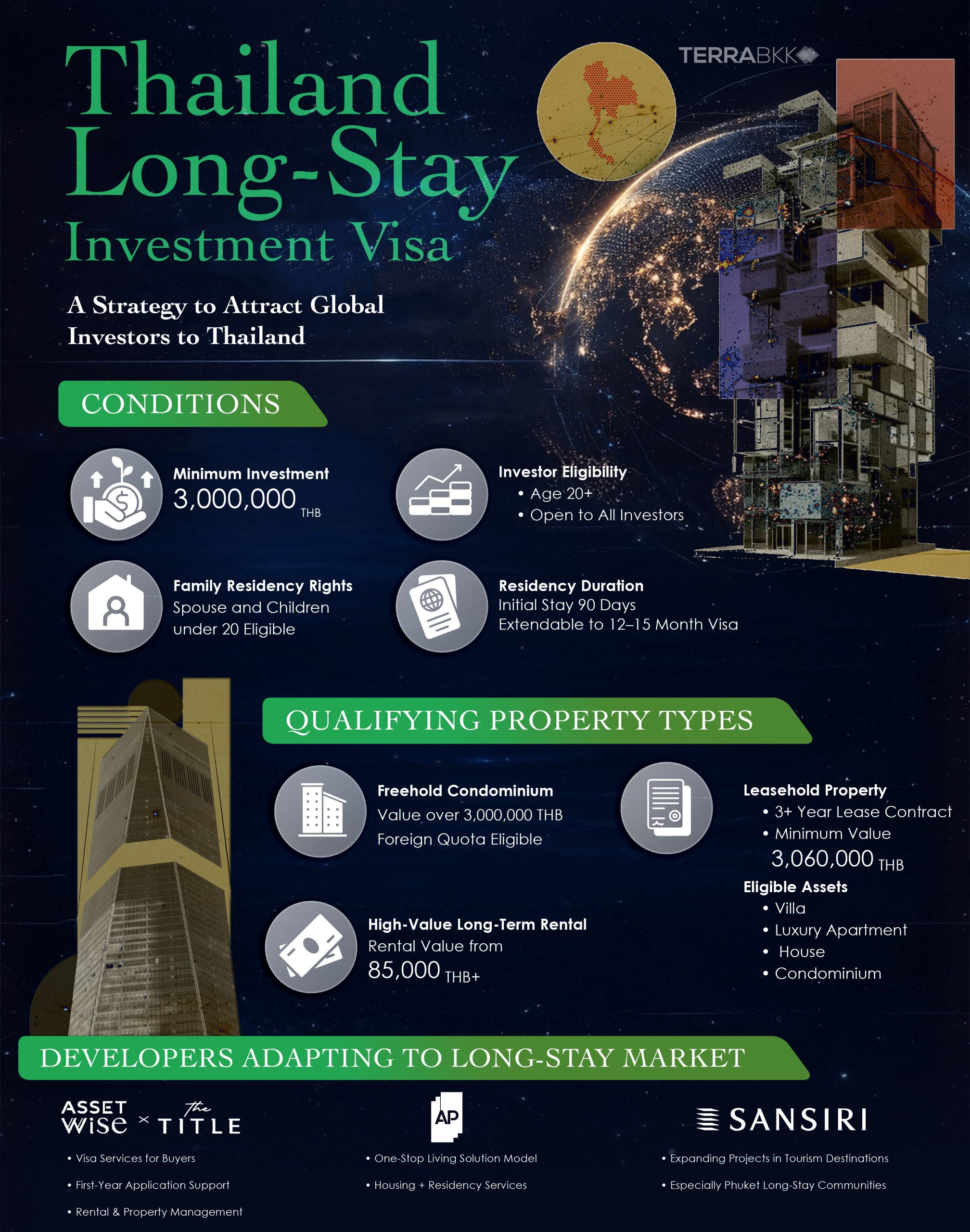
The program that is currently gaining significant interest is the Investment Visa, or a long-term residency visa granted through investment. The Thai government allows foreign investors to reside in the country by investing in economy-stimulating assets, particularly residential real estate. This visa is designed to attract foreign capital and support the growth of the real estate and hospitality sectors through the following key conditions:
- Minimum Investment Value: 3,000,000 THB Investors can purchase a Freehold condominium under the Foreign Quota or engage in a long-term lease with a total value exceeding 3 million THB.
- Investor Qualifications: Aged 20 and above This opportunity is open to investors of all ages, not just retirees, making it a primary choice for younger investors and Digital Nomads.
- Residency Rights for Family Investors can apply for their spouse and children (under 20 years old) to reside in Thailand together. Family residency rights are granted through a single property purchase.
- Visa Duration The initial stay is permitted for 90 days, which can then be extended into a long-term residency visa of approximately 12–15 months.
Eligible Property Types for Investment
- Freehold Condominiums priced above 3,000,000 THB within the legal Foreign Quota.
- High-Value Long-Term Rentals or “Rental Hybrid” models: Under the latest regulations, rentals valued at approximately 85,000 THB per month or more are eligible for long-term residency. This requires a minimum 3-month advance payment for the initial 90-day visa and more than 12 months of advance payment for the subsequent long-term extension.
- Leasehold Rights (3 years or more): Eligible for villas, luxury apartments, houses, or condos, provided the lease value exceeds 3,060,000 THB.
These conditions allow Thailand to compete effectively with regional neighbors like Malaysia, Philippines, Vietnam and Singapore, which also use real estate to attract foreign investors.
Positive Impacts on the Thai Real Estate Sector
Linking long-term visas to real estate investment yields several benefits:
Support for the Rental Market: Investors can generate income by providing long-term rentals to other foreign residents.
Increased Foreign Demand: Buyers now include digital nomads, investors, and families looking to relocate, rather than just tourists.
Market Stimulation in Key Cities: Hubs like Bangkok, Phuket, Pattaya, and the EEC (Eastern Economic Corridor) have become centers for long-term investment.
Boost to the Service Economy: Long-stay residents generate continuous spending in tourism, dining, education, and healthcare.
The Role of Real Estate Developers
Thai developers are shifting strategies to accommodate the long-stay market through “Integrated Longstay Service” models, which bundle property purchases with visa assistance and after-sales care. Examples include:
- AP Thailand: Offers a “One-Stop Living Solution” for foreign clients across brands like THE ADDRESS, RHYTHM, LIFE, and ASPIRE, providing comprehensive visa and convenience services.
- ASW and TITLE: Partnering with Thailand Longstay Management Company to facilitate visas for clients investing 3M THB or more. They also sponsor the initial 27,000 THB long-term visa application fee and provide property management/rental services.
- Sansiri: Working with Thailand Longstay to promote projects in tourist cities like Phuket as a permanent base for foreigners.
ConclusionThe Long-Stay policy is a tourism measure integrated with an economic strategy to draw global capital into Thailand. By linking property investment with long-term residency, Thailand is transforming “buying a home” into a long-term investment. Ultimately, this will propel Thailand toward becoming a World-Class Living Destination, strengthening both the real estate sector and the economy.
RELATED ARTICLES
Thai Real Estate Market Remains Attractive to Foreign Buyers: A Deep Dive into the Top Countries by Market Share

Thailand’s Real Estate 2026: Why Strategic Investors are Buying While the Market Cools
Turning Thai Real Estate into Long-Stay Residency
