NEWS & EVENTS

As has been widely observed, the 2026 Thai real estate market is not particularly vibrant. This is set against a backdrop of global economic volatility and domestic household debt, which continues to pressure and slow down the mid-to-low-end segments.
Despite the exhaustion of domestic purchasing power, opportunities remain driven by a significant influx of foreign capital into the Thai condominium market. Data from the Real Estate Information Center (REIC) released in March 2026 revealed that foreign ownership transfers surged to over 14,899 units, with a total value exceeding 6.921 billion THB—representing a growth of 10.7%.
Interestingly, the total transaction value is growing faster than the number of units. This phenomenon reflects several perspectives: Is this “real” capital? Or is it simply an increase in the price per unit?
What is clear is that amidst an economy under close surveillance, the purchasing behavior of foreign buyers is shifting toward “More Selective.” Buyers are willing to pay a higher premium for high-quality assets, a trend known as a “Flight to Quality.”
For investors, the critical question today is no longer just “Should I buy real estate in Thailand?” but rather “Which segment holds the potential for long-term growth?” The goal is to outpace inflation and generate worthwhile long-term returns—especially as primary buyer groups from China, Myanmar, Russia, Taiwan, and the United States are currently seeking for unique assets in prime locations.
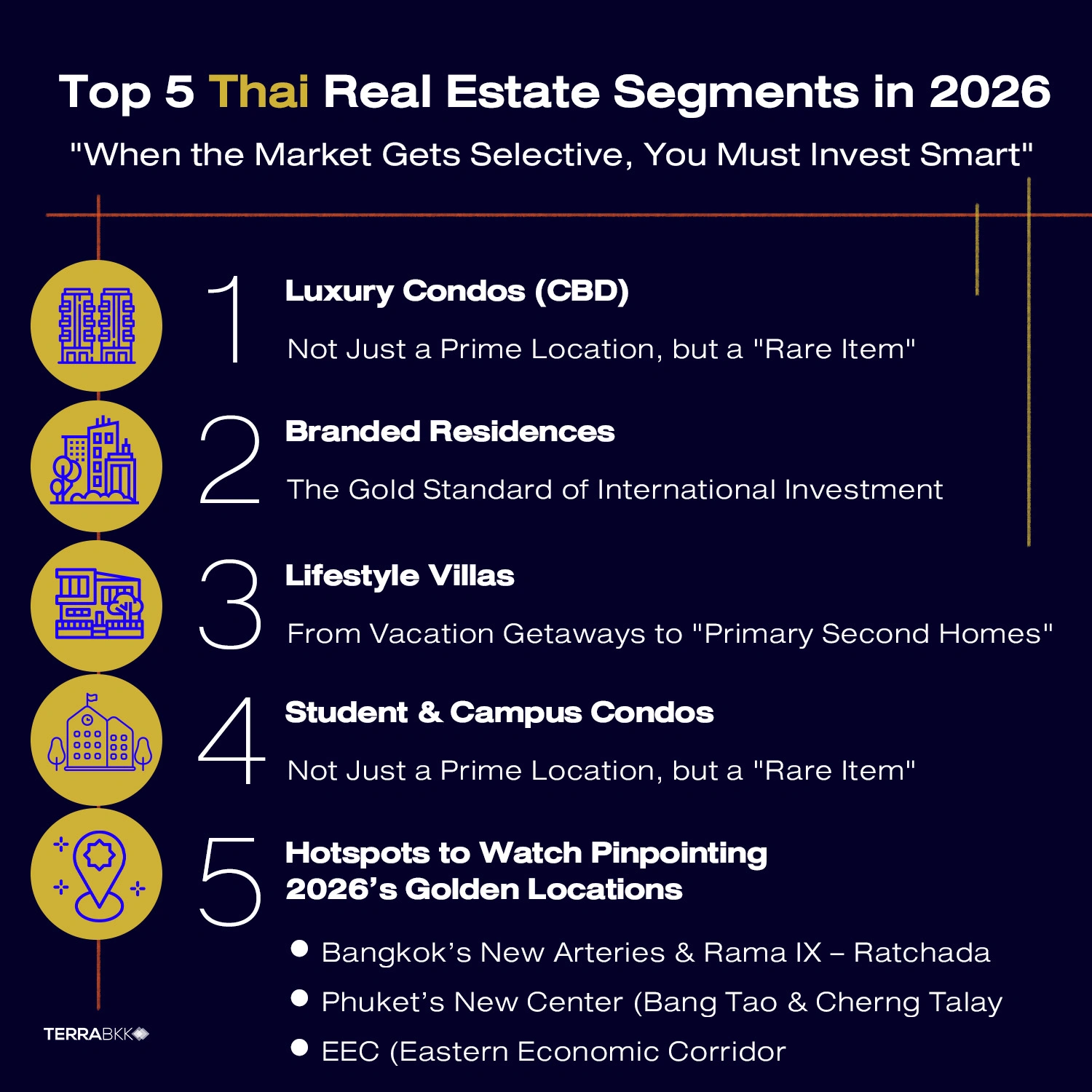
1. Luxury Condos (CBD): It’s Not Just a Prime Location, It’s a “Rare Item”
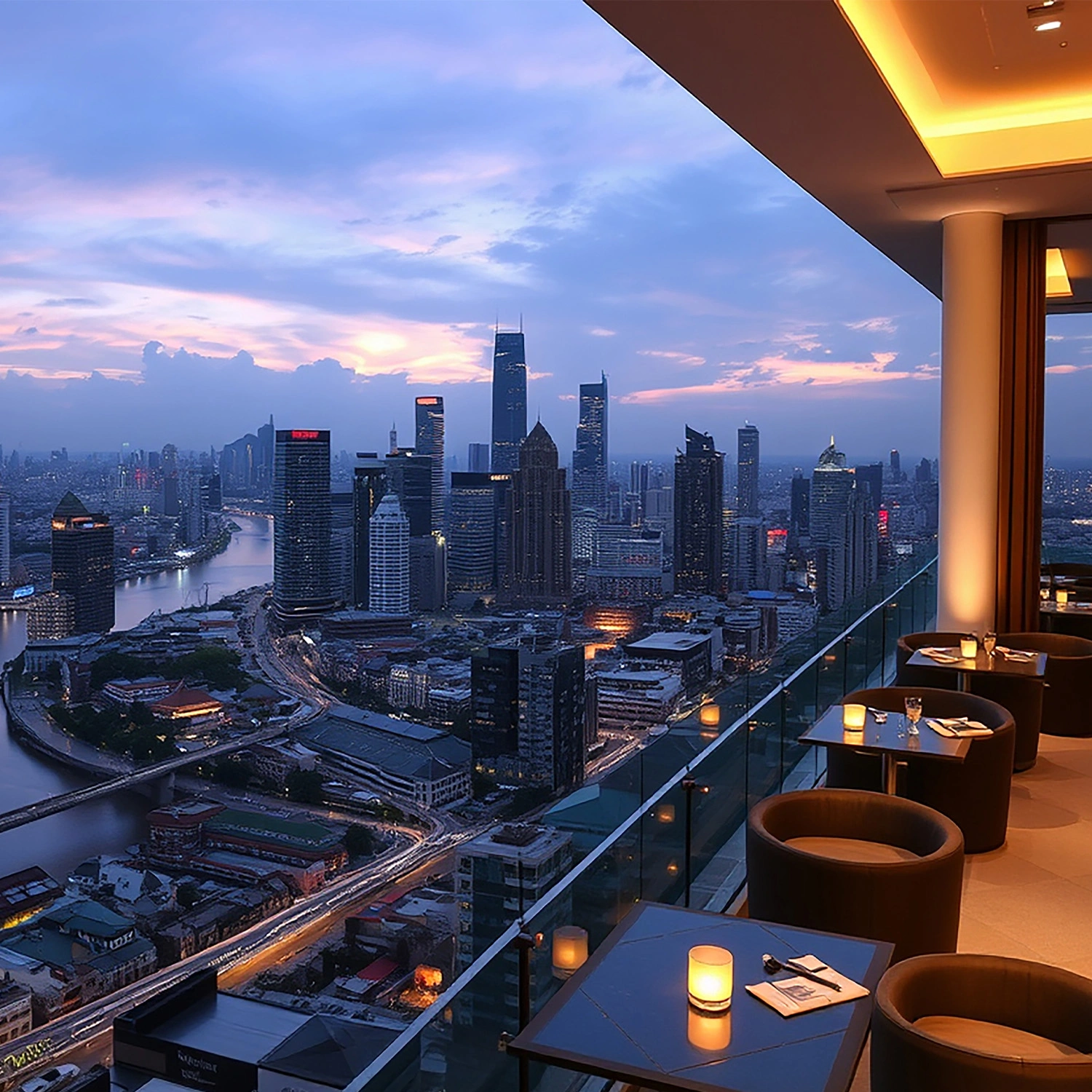
When discussing the stability of a Thai real estate investment portfolio, luxury condominiums in the Central Business District (CBD) remains the undisputed “King of Assets.” This is especially true for the Sukhumvit area closer to CBD (Phrom Phong, Thong Lo, Ekkamai, Chid Lom) as well as the financial districts of Silom and Sathon.
The key driver in these areas isn’t just the project’s opulence, but rather the “Limited Supply”—the fact that land for new developments is now almost impossible to find.
A significant turning point for Luxury Condo investment in 2026 is that developers have shifted their focus toward Wellness Facilities and Smart Home Technology to attract high-net-worth buyers. This is particularly true for affluent investors from the Middle East, who are increasingly looking for residences priced at 50 million THB or more to diversify their risk.
In this segment, a unit is no longer just a place to live; it must be a space that promotes well-being. This includes hospital-grade air filtration systems, highly private common areas, and automation systems that connect every aspect of living to a smartphone. These features are the primary determinants of rental rates and resale value, maintaining an average Capital Appreciation of 3–5% per year.
2. Branded Residences: Global Investment Standards
Another segment that has emerged as a rising star in 2026 is Branded Residences—residential projects managed by world-class hotel chains. This group has gained immense popularity among High-Net-Worth investors globally due to “Brand Trust.” This guarantees that the asset will be maintained to the highest standards at all times, unlike typical condos that often face the deterioration of common areas if management is subpar.
According to data from Knight Frank Thailand, prices for certain luxury Branded Residences have now reached 250,000 THB per square meter.
From an investment perspective, this segment boasts a significantly higher Resale Value than general projects. This is because Ultra-High-Net-Worth buyers are purchasing a “Lifestyle” and “5-Star Service,” such as 24-hour concierge services or private chefs. Consequently, these projects are viewed as the most effective Safe Haven for parking capital, as the brand’s equity serves as a strong barrier against price depreciation.
3. Lifestyle Villas: From Vacation Homes to Second Homes
Locations like Phuket and Samui remain all-time favorites. Today, they have fully transcended being mere “tourist destinations” to become “Global Residential Hubs.” Phuket, in particular, has been elevated to a foreign real estate hub driven by strong demand from Europe and Russia.
The clear trend is the status shift of luxury villas from holiday homes to “Primary Residences” or second homes for high-end Digital Nomads and affluent families seeking a better quality of life.
The investment model for these villas has become “Hybrid”—owners reside in them personally and rent them out during the remaining periods, generating strong yields from long-stay tenants. In addition to the familiar Bang Tao and Cherng Talay areas, new high-potential zones with large plots of land and lush natural environments have emerged, such as Phru Champa, Thalang, and Palai-Chalong, which are rapidly growing and worth watching in Phuket.
4. Student & Campus Condos: The “Hidden Gems” with Stable Demand
For investors focusing on Cash Flow with low risk, “Student/Campus Condos” surrounding prestigious institutions like Chulalongkorn University, Thammasat (Rangsit), or Kasetsart University are guaranteed options. Student housing demand remains consistent year after year.
The highlight is an Occupancy Rate near 100% throughout the academic year, offering a stable Rental Yield of 5–7%, which is higher than condos in some parts of Bangkok. By 2026, room layouts have evolved to meet the needs of “Gen Alpha,” featuring modern co-working spaces and high walkability to campus.
5. Hotspots to Watch: Pinning the Gold Locations of 2026
Beyond the segments, choosing the right “location” is the heart of investment. Notable locations include:
- Bangkok’s New Arteries (Rama IX – Ratchada): With the Orange and Pink Lines in full operation, the city structure is changing. The Rama IX – Ratchada area has become the “New CBD” for a younger generation of expats.
- Phuket’s New Center (Bang Tao & Cherng Talay): The hottest location in the South, serving as a hub for luxury lifestyle centers and attracting massive capital from Russia and Europe.
- EEC (Eastern Economic Corridor): A strategic point for long-term investors looking for growth from tech industries and the high-speed rail connecting three airports.
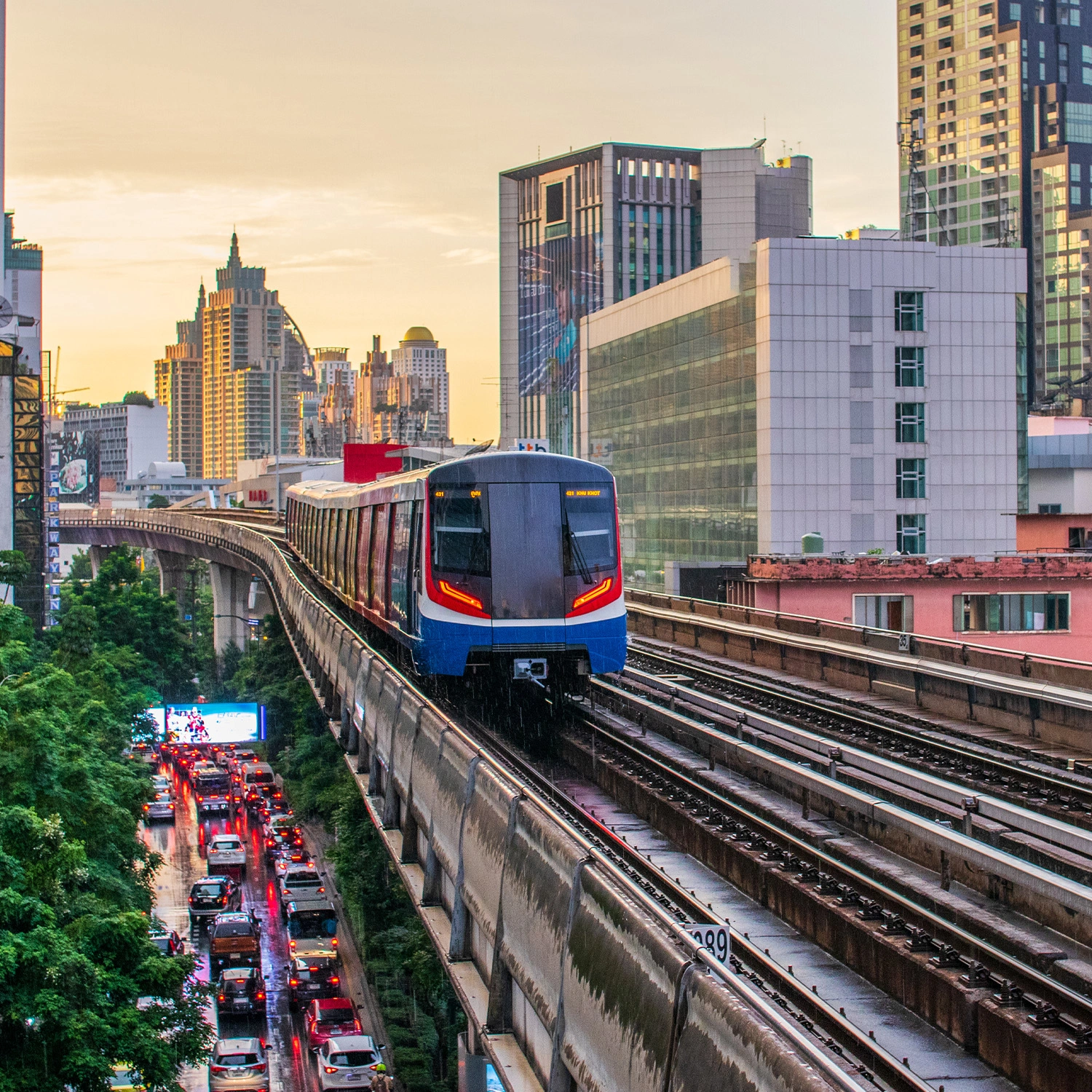
In conclusion, investing in Thai real estate in 2026 requires more diligence than ever. The key is choosing Reputable Developers with a solid management track record. In a market that has entered “filtering mode,” brand reputation and stability are your best defenses against risk.
If your goal is sustainable wealth, Thai real estate in 2026 remains full of opportunities for those who see “Value” beyond just the “Price.”